
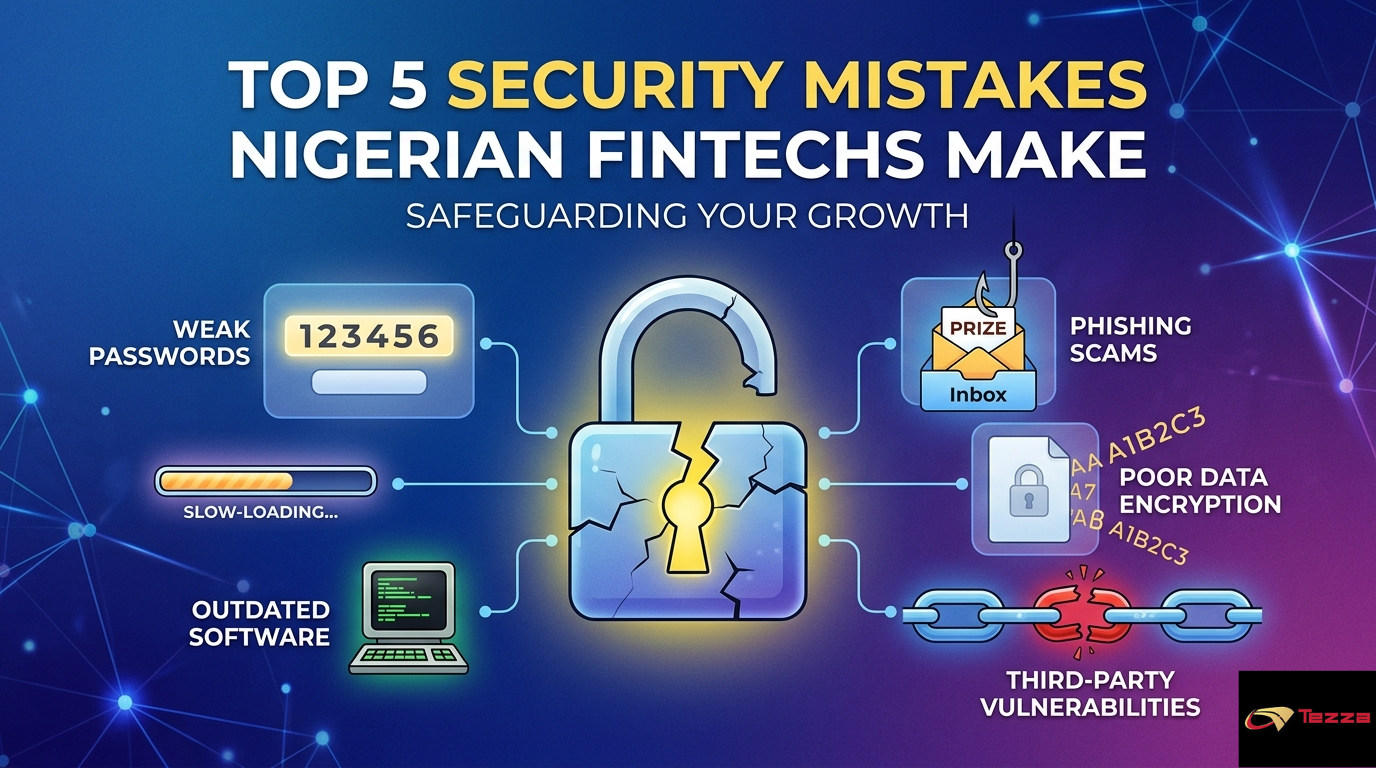
Safeguarding Growth: 5 Common Security Oversight in Nigerian Fintech
The Nigerian fintech landscape is currently one of the most vibrant in the world. As we continue to lead the continent in digital payment innovation, the responsibility to protect customer trust has never been greater. While many firms invest heavily in customer acquisition and user experience, security can sometimes inadvertently take a back seat.
A single oversight can have far-reaching implications, not just for an individual company’s reputation, but for the collective trust in our digital economy. Here are five of the most frequent security mistakes currently observed in the sector.
1. Underestimating the “Human Element”
Technology is rarely the weakest link; people often are. Many organisations focus on sophisticated firewalls but neglect regular, high-quality security training for their staff. From the marketing team to the boardroom, every employee must be able to recognise a sophisticated phishing attempt or a social engineering tactic. Security is a culture, not just a department.
2. Inadequate Management of Third-Party Risks
In our interconnected ecosystem, most fintechs rely on external partners for identity verification, cloud hosting, or payment processing. A common mistake is assuming that a partner’s security is “good enough” without conducting thorough, ongoing due diligence. Remember, a vulnerability in a vendor’s system can quickly become a doorway into yours.
3. Relying on Outdated Identity Verification
With the rise of sophisticated AI, traditional “proof-of-life” photos and simple SMS OTPs (One-Time Passwords) are becoming less secure. Relying solely on these methods leaves systems open to SIM-swapping and “deepfake” identity fraud. Moving toward more robust, multi-layered authentication—such as biometrics or hardware-based tokens—is no longer a luxury; it is a necessity.
4. Overlooking “Orphaned” Accounts
As teams grow and talent moves within the industry, access management can become cluttered. “Orphaned” accounts—administrative credentials belonging to former employees that remain active—are a significant risk. Without automated processes to revoke access immediately upon an employee’s departure, these accounts become “sleeper” entries that bad actors can exploit.
5. Prioritizing Speed over Secure Development
In the rush to launch a new feature or meet a market demand, security checks are sometimes treated as a final “hurdle” rather than being integrated into the initial design. This “bolt-on” approach to security often leads to business logic flaws—gaps in how a transaction is processed that allow for unauthorized withdrawals or “double-spending” errors.
Moving Forward
Building a secure fintech is not about achieving perfection, but about maintaining constant vigilance and adapting to a shifting landscape. By addressing these common oversights, Nigerian fintechs can ensure that their growth is built on a foundation of resilience and integrity.
Is your security framework ready for the challenges of 2026?
We help growing fintechs align their operations with the latest regulatory standards and global best practices. Contact us today for a consultation on how to strengthen your digital defences without slowing down your innovation.